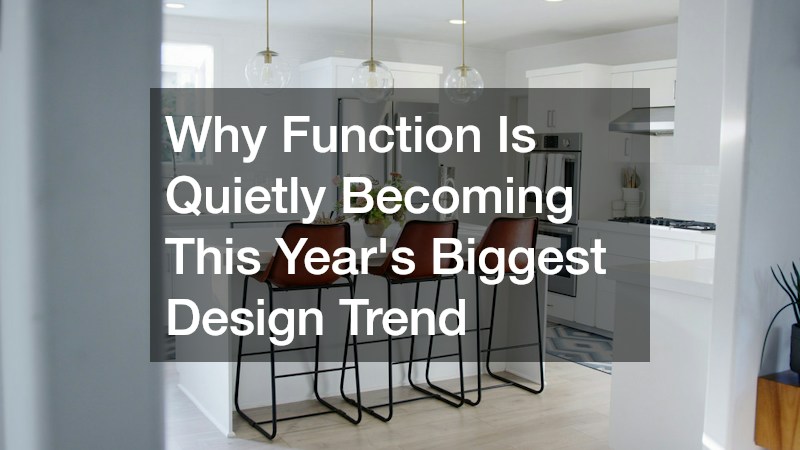
Why Function Is Quietly Becoming This Year’s Biggest Design Trend
For years, home design trends have chased dramatic statements: bold accent walls, statement lighting, and Instagram-ready spaces built for photos rather than daily life. But a quieter shift is taking hold in homes across the country, one where usefulness matters more than flash. Homeowners are asking different questions before they renovate or decorate, focusing on how a space actually performs rather than how it looks in a single snapshot. This article breaks down where that shift is showing up, room by room and system by system, so you can make smarter decisions with your own home.
Storage Spaces Built Around Real Daily Habits
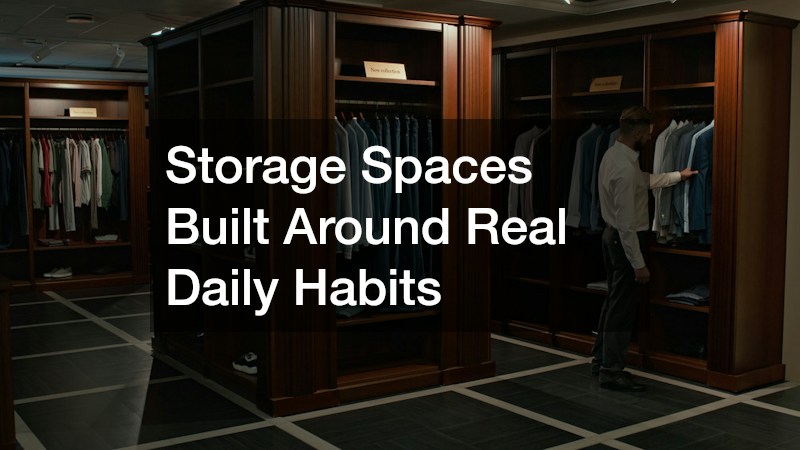
Closets used to be an afterthought, a single rod and shelf meant to hold whatever fit. That is changing fast as homeowners realize that smart storage solves more everyday frustration than almost any other upgrade. Closet organization systems now account for some of the most requested projects among homeowners tackling function-first renovations, because they turn wasted vertical space into usable storage without requiring an addition or major construction.
The appeal is practical rather than aesthetic. A well-designed system keeps shoes, seasonal items, and accessories visible and accessible instead of piled in bins, which cuts down on morning stress and makes cleaning easier. Many people are surprised how much a closet upgrade improves the feel of an entire bedroom, even though the footprint never changes.
- Adjustable shelving that grows with changing storage needs
- Pull-out drawers for folded clothing and accessories
- Dedicated zones for shoes, bags, and out-of-season items
- Better use of vertical space above and below hanging rods
Kitchens That Prioritize Workflow Over Showroom Looks
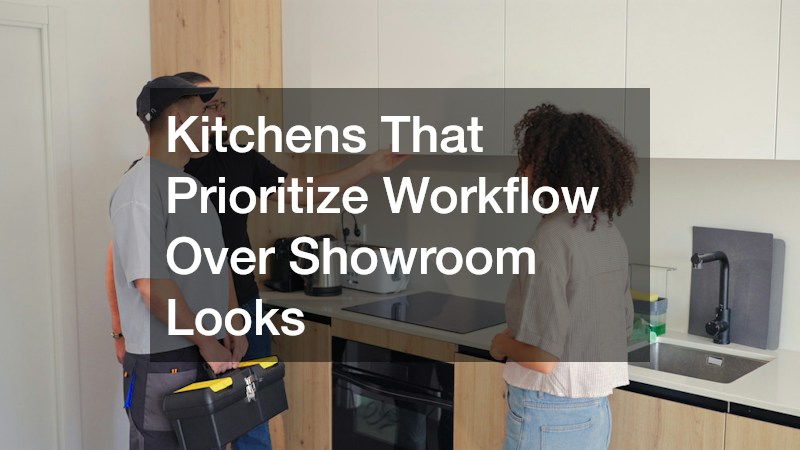
The kitchen has always been a functional room, but the definition of function is shifting. Instead of chasing trendy finishes that look dated in five years, homeowners are investing in layouts and storage that actually support how they cook and gather. Kitchen cabinets are a major part of this conversation, since the right configuration can eliminate the daily hunt for pots, lids, and pantry items that plagues so many older kitchens.
Deep drawers near the stove, pull-out trash and recycling bins, and cabinets sized for small appliances are becoming standard requests rather than upgrades. This approach treats the kitchen as a workspace first, with style decisions layered on top of a layout that already makes sense. The result tends to age better than trend-driven choices, because a kitchen that works well rarely feels outdated.
- Deep drawers positioned near cooking zones for easy access
- Vertical dividers for baking sheets and cutting boards
- Pull-out shelves that eliminate reaching to the back of cabinets
- Dedicated cabinet space for small appliances and pantry goods
Outdoor Living Areas Designed for Low Maintenance
Outdoor spaces are following the same function-first pattern seen indoors. Homeowners still want an attractive yard, but they are increasingly prioritizing choices that reduce upkeep over time rather than ones that simply look good on installation day. Fresh mulch is one of the simplest examples, since a well-planned layer around beds and trees suppresses weeds, retains soil moisture, and cuts down on the watering and weeding that eat up weekend after weekend.
This mindset extends to hardscaping and plant selection too, with many homeowners choosing native or drought-tolerant plants specifically because they demand less ongoing care. The goal is a yard that still looks intentional in August as it did in May, without constant intervention. That kind of durability is exactly the kind of quiet, practical thinking driving this broader design shift.
- Fresh mulch to suppress weeds and retain soil moisture
- Native or drought-tolerant plants that need less watering
- Simplified garden beds that are easier to maintain long term
- Pathways and borders that reduce erosion and edging work
Climate Control Systems That Keep Homes Comfortable Year Round

Nothing tests the limits of a beautifully designed home faster than a broken air conditioner in July or a furnace that fails in January. That is why more homeowners are treating climate control as a design priority rather than an invisible utility they only think about during a breakdown. Scheduling AC repair before the peak of summer heat, rather than waiting for a full system failure, has become a common part of seasonal home maintenance planning.
The same logic applies to heating and ventilation more broadly. Regular HVAC repair and inspection catches small issues, like worn belts or clogged filters, before they turn into expensive emergencies or uneven temperatures throughout the house. Homeowners who build this kind of maintenance into their yearly routine tend to spend less overall and enjoy a more consistently comfortable home.
- Annual tune-ups before peak summer and winter seasons
- Filter changes every one to three months for better airflow
- Prompt attention to strange noises or inconsistent temperatures
- Duct inspections to catch leaks that waste energy
Roofing Systems That Protect the Rest of the Home
 A roof rarely gets attention until something goes wrong, but its condition affects nearly everything else in a home, from insulation performance to water damage prevention. Reaching out to local roofers for a routine inspection, especially after severe weather, is one of the most functional decisions a homeowner can make. Small issues like lifted shingles or minor flashing damage are far cheaper to fix early than after they lead to interior leaks.
Timely roof repair also protects the value of everything underneath it, including insulation, drywall, and any recent renovation work. Homeowners who treat roof maintenance as an ongoing responsibility, rather than a reactive fix, tend to avoid the kind of large-scale damage that turns a simple repair into a full replacement. This proactive mindset is a clear example of function driving decisions that used to be purely reactive.
- Annual inspections, especially after storms or heavy wind
- Prompt attention to missing, cracked, or curling shingles
- Gutter maintenance to prevent water backup under the roofline
- Attic checks for moisture or ventilation issues
Plumbing Systems That Prevent Costly Water Damage
Water damage is one of the most disruptive and expensive problems a homeowner can face, which is why plumbing has quietly become a bigger focus in function-first home planning. Industry estimates put the average water damage claim at over $10,000, and that figure climbs fast once mold remediation or structural repairs enter the picture. A licensed plumber can spot early warning signs, like slow drains, slight pressure changes, or a faint musty smell near baseboards, that often signal a bigger issue building behind the walls. Small clues like a water heater that’s slower to recover or a toilet that runs intermittently can also point to failing components long before they fail completely. Catching these problems early is almost always cheaper and less disruptive than dealing with a burst pipe or major leak later. Many homeowners now schedule annual plumbing inspections the same way they would an HVAC tune-up, treating pipe age, water pressure, and shutoff valve condition as routine maintenance checkpoints rather than afterthoughts. This shift also reflects a broader mindset change: instead of viewing plumbing as invisible infrastructure, homeowners are starting to see it as a core system worth budgeting for, right alongside insulation, electrical, and roofing.
This shift also shows up in how people plan renovations, with many choosing to upgrade pipes and fixtures during a remodel rather than waiting for a failure to force the issue. Repiping a section of galvanized steel or aging polybutylene while walls are already open costs far less than an emergency repair after a leak has soaked through drywall, flooring, and insulation. Fixtures with better flow control and materials designed to resist corrosion are increasingly popular for exactly this reason. PEX tubing, for instance, resists freezing and scale buildup better than older copper or steel lines, while brass and stainless fittings hold up longer in areas with hard water. Smart leak detectors and automatic shutoff valves are also becoming common additions, since they can catch a slow drip behind a wall before it turns into a five-figure insurance claim. Homeowners are also paying closer attention to water pressure regulators and expansion tanks, both of which quietly extend the life of everything downstream, from washing machine hoses to dishwasher lines. It is a practical, unglamorous investment, but it is one that protects everything else in the home.
- Regular checks for slow drains or unusual water pressure, both early warning signs of hidden clogs or pipe corrosion
- Pipe upgrades during renovations, swapping old galvanized or polybutylene lines for PEX or copper to prevent future leaks
- Water heater maintenance, including annual tank flushes and anode rod checks, to extend its working lifespan
- Prompt repair of small leaks before they cause structural damage, especially around fittings, valves, and slab foundations
- Installation of smart leak detectors or automatic shutoff valves that alert homeowners the moment moisture is detected
- Periodic inspection of water pressure regulators, since pressure above 80 psi accelerates wear on pipes and appliances
Site Work and Drainage That Protect a Home’s Foundation
Function-first thinking does not stop at the walls of a house. What happens below and around a home, particularly with grading and drainage, has a massive impact on long-term durability. Excavating companies are increasingly involved in projects that go beyond new construction, helping homeowners regrade yards, install proper drainage, or correct water pooling issues near the foundation.
Poor drainage is one of the most common hidden causes of foundation cracks, basement moisture, and landscaping erosion. Addressing it properly usually requires equipment and expertise beyond typical yard work, which is why more homeowners are bringing in specialized help before problems escalate. Getting this right protects the investment made in every other part of the home, from the roof to the kitchen.
- Proper grading to direct water away from the foundation
- French drains or dry wells for chronic wet spots
- Culvert or driveway drainage corrections
- Soil compaction work before major landscaping projects
Everyday Fixtures and Hardware Chosen for Long Term Use
The smallest details in a home often reveal the biggest shift toward function. Door hinges, cabinet hardware, faucets, and light switches are being chosen for durability and ease of use rather than purely for style. Homeowners are asking practical questions before buying: will this hinge still close quietly after five years, can this faucet finish handle hard water without pitting, will this switch plate crack under repeated use. Materials are part of this shift. Solid brass hinges and stainless steel cabinet pulls are replacing cheaper zinc alloy versions because they resist corrosion and warping over time. Ceramic disc faucet valves, which can handle hundreds of thousands of on-off cycles without leaking, are being specified over older washer-based designs that wear out and drip within a few years. Ease of use matters just as much as material quality. Lever-style door handles and rocker light switches are gaining ground over traditional knobs and toggle switches because they work better for aging hands, kids, and anyone carrying groceries. Soft-close cabinet hinges and drawer slides, once considered a luxury upgrade, are increasingly the default choice because they reduce wear on the cabinetry itself. This is a subtle but telling sign that homeowners are thinking long term, prioritizing items that will hold up to years of daily use over pieces that simply look trendy for a season. Many are also factoring in warranty length and replacement part availability, recognizing that hardware chosen well now can save both money and hassle down the road.
Manufacturers have responded by offering more products that blend attractive finishes with genuinely improved mechanisms, like soft-close drawers, lever-style handles that are easier on the hands, and cabinet hinges rated for tens of thousands of open-close cycles. Faucets with ceramic disc valves, for instance, are now common even at mid-range price points, replacing the rubber washers that used to wear out and drip within a few years. Door hardware with hardened steel components resists the loosening and jamming that once made replacement feel inevitable after a decade of daily use. These choices rarely make headlines, but they add up to a home that feels more comfortable and requires less frequent replacement. Homeowners are also paying closer attention to details like weight capacity on drawer slides or corrosion resistance on outdoor hardware, since these specs quietly determine how long a fixture actually performs before it needs swapping out. A slightly higher upfront cost for these features often means avoiding a full replacement cycle five or ten years down the line. It is another quiet signal that good design and good function are becoming the same conversation. Buyers are no longer treating finish and mechanism as separate decisions, but as a single package worth evaluating together.
- Soft-close hinges and drawer slides rated for 50,000+ cycles, so doors and drawers stay quiet and functional for decades
- Lever-style handles that are easier to use for all ages, including kids, seniors, and anyone with limited grip strength
- Corrosion-resistant faucet finishes like PVD or brushed nickel that resist tarnish, pitting, and hard water buildup
- Durable, easy-clean materials for high-traffic hardware, such as matte finishes that hide fingerprints and smudges
- Weight-rated cabinet hinges that support heavier doors, like glass-front or solid-wood panels, without sagging over time
- Backplates and pulls sized for easy grip, reducing wear on surrounding cabinetry from repeated contact
The common thread across all of these changes is simple: homeowners are choosing decisions that hold up over time, not just ones that look good on day one. Whether that means reorganizing a closet, checking in with local plumbers before a small leak becomes a big one, or scheduling a roof inspection before storm season hits, the smartest upgrades are the ones you barely notice because they simply work. Start by walking through your own home and identifying the systems and spaces that cause the most daily friction. Addressing those areas first will deliver more lasting satisfaction than any purely cosmetic update.