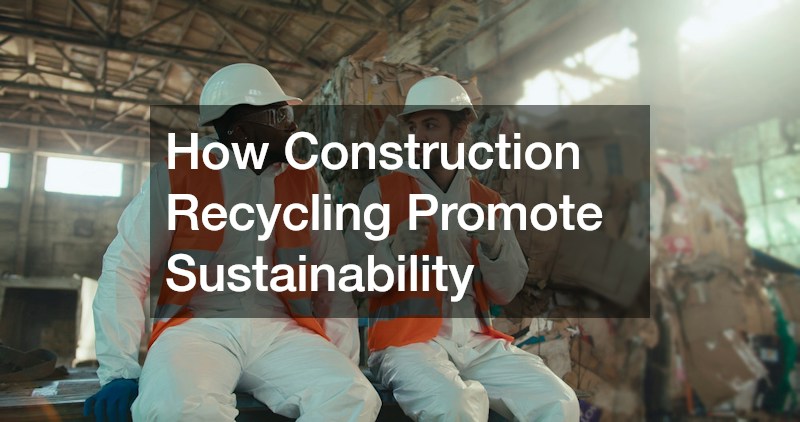
How Construction Recycling Promote Sustainability
How Construction Recycling Promotes Sustainability
Understanding Construction Recycling
Construction recycling involves the process of reclaiming, reprocessing, and repurposing materials from construction and demolition waste. In recent years, it has become increasingly important due to the need for sustainable development. Recycling helps to minimize the environmental impact of construction by reducing the amount of waste sent to landfills.
Typically, construction sites produce a substantial amount of waste, including materials like concrete, wood, metals, and plastics. Properly managed, these materials can be recycled or reused, leading to a reduction in consumption of natural resources.
Many governments around the world have implemented regulations and incentives to encourage construction recycling. These regulations often include mandates for waste reduction and recycling targets that construction companies must meet. The push towards recycling not only helps in conserving resources but also in decreasing the energy usage required to produce new materials. As companies strive to meet sustainability goals, construction recycling has become a key practice in the industry. It also helps reduce the carbon footprint associated with production and disposal activities.
Moreover, recycling on construction sites promotes the circular economy, which emphasizes the reuse of materials and the reduction of waste. By recycling materials, the construction industry can support this economic model, closing the loop and creating a sustainable cycle. The reuse of materials helps conserve natural resources and decreases the need for extracting new raw materials from the earth. This process benefits the environment and supports long-term sustainability, creating a healthier planet for future generations.
Benefits of Construction Recycling

One of the primary benefits of construction recycling is the conservation of natural resources. When materials are recycled, less virgin material is required for production, which in turn reduces the strain on natural resources. This conservation helps protect ecosystems and biodiversity, which can be disrupted by mining and other resource extraction processes. Additionally, recycling can significantly reduce the energy consumption associated with manufacturing new materials from scratch. By saving energy, the construction industry can help combat climate change and reduce greenhouse gas emissions.
Waste reduction is another significant benefit of construction recycling. The construction industry generates a large amount of waste, which can result in overflowing landfills and environmental pollution. By recycling materials on-site, construction companies can minimize the amount of waste sent to landfills, thus supporting cleaner environments. This reduction in waste also helps decrease disposal costs and extends the life of existing landfills, delaying the need for new landfill sites that are often met with public opposition.
Recycling can also drive economic benefits within the construction industry. By reducing the need for new materials, companies can lower the overall cost of construction projects, resulting in financial savings. Furthermore, recycling creates job opportunities in processing and repurposing materials. Investing in recycling infrastructure and programs supports economic growth and innovation, leading to a more robust and sustainable construction industry.
The Role of Technology in Construction Recycling
Advancements in technology have propelled the capabilities of construction recycling, making it more efficient and cost-effective. Modern recycling facilities are equipped with sophisticated machinery that can sort and process a wide variety of construction materials. Technologies such as advanced sensors and sorting systems have streamlined the recycling process, improving the accuracy and speed of material separation. As a result, more materials can be reclaimed and reused, further promoting sustainability in construction practices.
In addition to sorting technologies, innovations in material processing have also enhanced recycling efforts. For example, technology has enabled the development of recycled concrete aggregates, which are used as a substitute for natural aggregates in new concrete applications. This not only reduces the demand for natural aggregates but also provides a practical solution for the disposal of demolished concrete. Similarly, advancements in repurposing metals and plastics from construction waste have led to the creation of new, sustainable building materials.
Embracing technology in construction recycling not only increases efficiency but also provides significant environmental benefits. Automation and smart technologies can reduce the reliance on manual labor, improve safety and reduce resource wastage. Furthermore, technology-driven recycling supports data-driven decision-making, enabling construction companies to track waste management and recycling efforts in real time. This detailed monitoring allows for continuous improvement in recycling practices, further strengthening sustainability goals.