
Designing the Complete Modern Home Landscape
The concept of the residential yard has undergone a profound transformation in recent years. No longer are outdoor spaces viewed merely as decorative borders to be admired from a window. Today, they are highly functional extensions of the home itself, designed to facilitate outdoor living, dining, and relaxation. This shift toward modern outdoor aesthetics emphasizes clean lines, sustainable practices, seamless indoor-outdoor flow, and a distinct “less is more” philosophy. Crafting the perfect contemporary yard requires strategic planning, a delicate balance of soft and hard elements, and a dedicated focus on long-term usability over fussy, constant maintenance. By approaching your property as a series of interconnected functional zones rather than just a plot of grass, you can elevate both the value of your property and your daily quality of life. Consider these essential steps to conceptualizing, building, and refining a cohesive outdoor space that meets the demands of contemporary living while providing a serene retreat right outside your back door.
Draft a Cohesive Master Plan Before Breaking Ground

Before moving a single shovel full of dirt, the most crucial phase of your project begins on paper. Defining your functional zones is the bedrock of any successful outdoor transformation. You need to decide exactly how you intend to use the space. Will you be hosting large dinner parties, or do you prefer a quiet, meditative space for morning coffee? Do you need a durable play area for children, or is a sleek lounging deck your primary goal? By defining these zones using geometric lines and a unified color palette, you establish a clear vision before purchasing any materials.
Assessing your canvas is the next critical step. Every piece of land has unique microclimate and topographical challenges.
- Evaluate sunlight patterns throughout the day to determine where a dining table will be too hot in the afternoon or where shade-loving ferns will thrive.
- Analyze your soil composition and drainage. If water pools near your foundation after heavy rain, this must be addressed in the initial planning phase.
- Consider your lifestyle needs realistically. A sprawling vegetable plot might sound idyllic, but if you work long hours, a minimalist lounge space is much more practical.
Establishing flow between these newly defined zones is what makes a yard feel cohesive rather than disjointed. In modern aesthetics, straight, orderly pathways are preferred to connect different areas, maintaining a clean and uncluttered visual appeal.
When it comes to sourcing and strategy, taking the time to research pays massive dividends. It is highly advisable to start your plant selection by visiting a reputable local nursery and garden center to find climate-adapted species that will thrive organically in your specific region. This hands-on approach allows you to see the textures and colors of the flora before committing. Ultimately, ensuring the overall landscape design aligns flawlessly with the architectural style of your house is what elevates a basic yard into a stunning, integrated property. The exterior should feel like a natural continuation of the interior, sharing similar color palettes, materials, and design motifs.
Install Multi-Functional, Low-Maintenance Hard Surfaces

With a master plan firmly in place, the first physical step in your exterior transformation involves establishing the foundation of your outdoor rooms. Anchoring your outdoor living spaces with durable, neutral-toned materials that require minimal upkeep is essential for a contemporary look. These materials should be used to create crisp geometric shapes that contrast beautifully with the organic forms of your plants.
Rethinking the traditional expanse of grass is a hallmark of current outdoor trends. The modern homeowner is increasingly reducing water-heavy, resource-intensive lawns in favor of highly functional outdoor living rooms and smart, usable surfaces. This shift not only significantly cuts down on weekly maintenance and water bills but also maximizes the usable square footage of your property.
When paving the way for these new zones, material selection is paramount. Poured, oversized concrete patios are an absolute staple of contemporary aesthetics. They offer incredibly clean edges, a sleek texture, and a subdued color palette that effortlessly grounds the space. Unlike smaller pavers that can shift and allow weeds to sprout through numerous joints, large poured slabs provide a seamless, unblemished surface that is easy to sweep and incredibly durable against the elements.
To achieve this level of precision, professional execution is non-negotiable. It is crucially important to hire experienced hardscaping contractors to ensure proper grading, flawless drainage, and seamless, trip-free transitions between different paving materials. Water management is a complex aspect of any yard renovation; if surfaces are not pitched correctly, water can pool against your home’s foundation, causing catastrophic damage. Professionals possess the heavy machinery, technical knowledge, and precision required to excavate the site, lay a compacted base, and finish the surface so that it remains level for decades.
Consider incorporating a variety of complementary textures to keep the hard surfaces visually interesting.
- Pair smooth poured slabs with borders of dark river rock or crushed basalt.
- Use natural wood decking, such as sustainably sourced ipe, to define dining areas and add warmth to the gray tones of the stone.
- Integrate stepping stones set into gravel for secondary pathways that lead to quieter corners of the property.
Sculpt Your Terrain for Privacy and Soil Stability
Very few properties are perfectly flat, and even those that are often benefit from the introduction of vertical elements. Sculpting your terrain allows you to turn challenging slopes, uneven ground, or exposed property lines into striking architectural features using structural barriers.
Taming slopes is a common challenge that presents a fantastic design opportunity. You can transform hilly or steeply pitched ground into tiered, highly usable levels that define different functional zones. Instead of a sloping lawn that is difficult to mow and impossible to place furniture on, you can create a sunken fire pit area or an elevated dining terrace. To hold back the earth and create these levels, you will need strong structural supports. Utilizing sleek, modern retaining walls made of Corten steel, smooth stucco, or board-formed concrete provides immense structural integrity while simultaneously adding a highly desirable architectural element to your yard. Corten steel, with its rusted, weathered patina, is particularly popular for adding an industrial yet warm texture that contrasts brilliantly against vibrant green foliage.
Securing the perimeter of your property is equally important, not just for safety, but for creating a sense of enclosure and sanctuary. You must establish property boundaries that complement the minimalist aesthetic rather than cluttering it with ornate or outdated styling. The perimeter should serve as a quiet backdrop to your outdoor living spaces.
Achieving privacy with style requires a thoughtful approach to materials and height. It is highly recommended to work collaboratively with a knowledgeable fence contractor to install modern perimeter solutions, such as horizontal wood slats or frosted glass panels. Horizontal lines naturally draw the eye outward, making the space feel wider and more expansive.
- Horizontal cedar or redwood slats provide a warm, organic feel that ages beautifully.
- Frosted glass panels offer absolute visual privacy while still allowing ambient sunlight to filter through, preventing the yard from feeling boxed in.
- Corrugated metal fencing paired with a dark-painted wood frame can add a striking, modern industrial edge.
- Living barriers, like densely planted clumping bamboo in steel troughs, can soften hard property lines while offering rapid vertical growth for immediate seclusion.
Layer Climate-Adapted Plants and Canopy Features

Once the hard surfaces and structural walls are in place, it is time to breathe life into the space with carefully selected greenery. Embracing a minimalist planting philosophy means stepping away from chaotic, overcrowded garden beds. Instead, the focus should be on grouping a few high-impact, drought-tolerant species and proactively managing your overhead shade to create a serene, uncluttered environment.
The rule of repetition is a guiding principle in contemporary planting. Rather than planting dozens of different species, limit your plant palette to three to five distinct varieties and repeat them throughout the yard in large, deliberate groupings. This creates a sense of profound unity and avoids the visually chaotic look of traditional cottage gardens. Drifts of ornamental grasses, neatly trimmed boxwoods, and structured succulents work harmoniously to create a soothing, cohesive tapestry.
Keeping the aesthetic crisp and well-defined is essential. Minimalism does not mean zero maintenance; in fact, a simple design often requires meticulous upkeep because there is no visual clutter to hide overgrown edges or dead foliage. Keeping edges perfectly sharp, removing fallen debris promptly, and maintaining precise geometric pruning is critical. Because this level of detail can be time-consuming, enlisting the consistent, detail-oriented help of professional lawn care companies is frequently a worthwhile investment for preserving that pristine, architectural look week after week.
Managing the canopy overhead is just as important as the ground-level flora. Large canopy plants provide essential shade for your outdoor living spaces and help lower the ambient temperature during the peak of summer. However, they require careful management to ensure they enhance rather than dominate the space.
- Focus on structural planting by choosing specimens with interesting branch architecture, such as Japanese maples or multi-trunk olive trees.
- Utilize expert tree services to safely thin out large, overgrown branches, maintain healthy sightlines, and ensure that mature greenery does not overwhelm the modern aesthetic.
- Consider the seasonal shedding of your chosen canopy; opt for evergreens if you want to avoid heavy autumn cleanup on your newly poured patios.
- Use strategic underplanting beneath large canopies, utilizing shade-tolerant ground covers to keep the soil stabilized and visually engaging.
Strategically Layer Low-Voltage Elements for Evening Ambiance
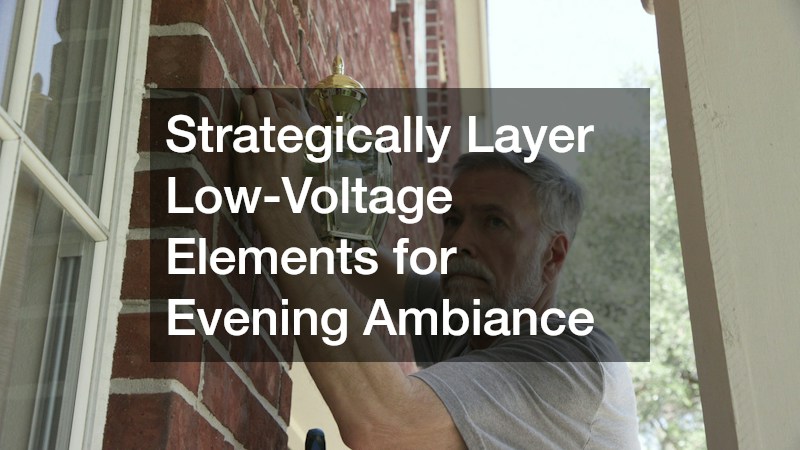
A truly complete outdoor space must be just as breathtaking and functional at night as it is during the day. Designing your outdoor illumination with intention allows you to highlight architectural textures, safely guide movement along pathways, and significantly extend the usability of the yard well into the evening hours.
Understanding the three layers of light is fundamental to creating a sophisticated evening ambiance. A single, glaring floodlight mounted to the back of the house is the enemy of modern design. Instead, you must layer ambient, task, and accent lighting.
- Ambient lighting provides a soft, general glow, such as dimmable string lights suspended over a dining area.
- Task lighting is brighter and focused, specifically illuminating outdoor kitchen counters or the precise edges of floating steps to ensure safety.
- Accent lighting creates drama, such as up-lighting the textured trunk of a sculptural agave plant or washing a textured stone wall with a soft glow to highlight its depth.
Fixture selection is a critical component of the overall design. The physical fixtures should blend seamlessly into the environment during the day. It is highly advantageous to partner with a specialized lighting company to select sleek, modern fixtures constructed of brass or powder-coated aluminum that will resist corrosion. Furthermore, they can guide you in choosing the correct color temperatures, typically recommending warm 2700K LED bulbs that cast a welcoming, fire-like glow rather than the harsh, sterile blue light of cooler temperatures.
Safety and power requirements are paramount when introducing electricity to an outdoor environment exposed to rain and irrigation systems. Modern yards are increasingly complex, often including outdoor kitchens, heavy-duty electric heaters, and intricate water features. Because of these intense power demands, you must stress the importance of bringing in a licensed residential electrician to safely run dedicated circuits, upgrade your electrical panel if necessary, and ensure all wiring meets strict municipal codes. Attempting to install high-voltage outdoor projects poses a severe safety risk. Proper planning here ensures your backyard retreat is both magical and entirely safe.
Achieving a successful contemporary outdoor space relies heavily on a perfect balance of architectural aesthetics and everyday functionality. The most captivating modern landscapes are rooted in clean lines, sustainable material choices, and intentional structural layout. By prioritizing how you actually intend to use the space and honoring the “less is more” philosophy, you can create a backyard that is both visually striking and incredibly practical for daily life. It is important to remember that such a comprehensive transformation does not need to happen all at once. Encourage yourself to tackle this outdoor evolution one functional zone at a time, allowing the master plan to guide your decisions over several seasons if necessary. A well-designed yard is an ongoing journey of refinement and enjoyment. We would love to hear about your own exterior design journey. Please feel free to share your favorite contemporary outdoor trends, your most successful layout strategies, or your biggest backyard challenges in the comments section below.